Academic Program Overview
Preschool/Pre-Kindergarten
The Qur’an is the heart of learning at our school, serving as a source of guidance, reflection, and connection to Allah throughout the day. Students build a strong spiritual and language foundation through group Qur’an memorization, including Surah Al-Fatiha and Surahs from An-Nas to Ad-Duha. As they memorize and recite the words of Allah, they develop a deep sense of love, reverence, and attachment to the Qur’an, nurturing a lifelong relationship with His Book. Students also develop early Arabic literacy by learning and recognizing all 28 letters of the Arabic alphabet, preparing them for future Qur’an reading, recitation, and memorization with confidence and understanding.
Our Preschool academic program builds strong early literacy foundations through engaging, developmentally appropriate experiences such as stories, songs, rhymes, and interactive activities. These foster language growth, early reading readiness, and beginning writing skills. Students develop essential pre-reading skills such as letter identification, letter-sound recognition, rhyming, blending, segmenting, beginning and ending sounds, vowel sounds, and sight word recognition, while growing in confidence with both upper- and lower-case letter formation.
Through rich exposure to literature and interactive learning, students begin applying foundational comprehension skills by exploring text features, distinguishing reality from fiction, making inferences, and making personal connections to stories. Early language development is further strengthened through vocabulary-building concepts such as nouns, verbs, adjectives, and location words, helping students communicate clearly while developing the building blocks for future reading, writing, and critical thinking success
Our Preschool math program develops strong early numeracy skills through hands-on exploration and meaningful problem solving. Students build foundational understanding in number recognition, counting, patterns, sorting, shapes, and early operations, including beginning addition and subtraction. Through number stories, games, and manipulatives, children develop mathematical reasoning, confidence, and fluency with numbers while learning to recognize and write numerals. These early experiences establish a strong foundation for future success in mathematics.
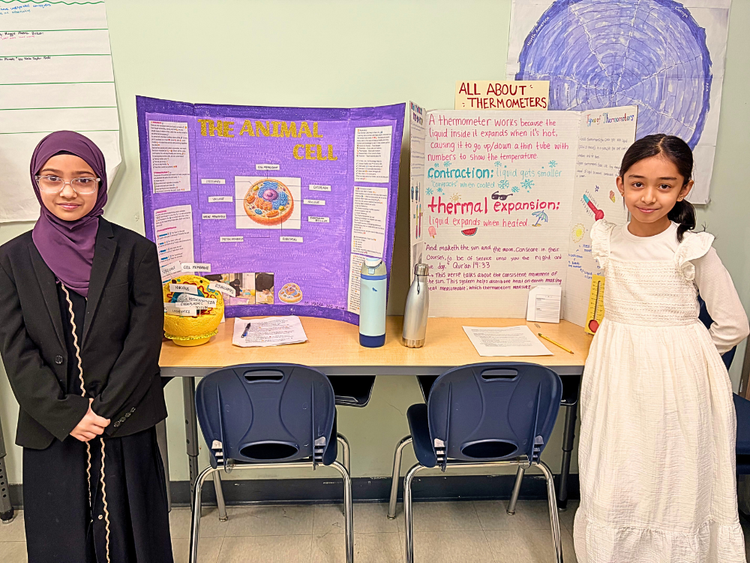
Our Preschool science program nurtures wonder and awe of Allah’s Creation. Young learners explore the world around them through observation, experimentation, and discovery. Topics include weather, seasons, planets, colors, shapes, materials, and the natural environment. Students develop curiosity and scientific thinking through hands-on investigations and guided exploration.
Students learn about themselves, their families, and their communities. Through age-appropriate activities, they explore community helpers, healthy habits, cooperation, and the important roles people play in everyday life. Students develop a sense of appreciation for the people who help others and hone healthy habits through teamwork, movement, and nutritious choices.
Students build foundational Arabic skills by learning to recognize, pronounce, and write all 28 letters, while connecting each letter to meaningful vocabulary. Through songs, games, stories, and role play, students develop early communication skills using simple words, phrases, directions, and questions in Arabic, including topics such as colors, numbers, body parts, and shapes. This vocabulary is then embedded in all of the students’ daily school activities, from eating their lunch to walking in the hallway, supporting a high level of comfort and familiarity with the Arabic language.
Students grow through a balanced approach that nurtures the spiritual, intellectual, moral, and physical aspects of development. More than a subject, Islamic Studies serves as the foundation of our educational philosophy and the lens through which all learning is viewed. Throughout the day, students actively practice what they learn by reciting daily du’as and morning adhkar, showing kindness and respect to others, honoring their elders, and striving to incorporate the Sunnah into their daily lives. Spiritually (Tawhid), students build a foundational understanding of belief in Allah and begin developing a strong sense of identity and purpose. Intellectually (Hikmah), they learn about the life and character of Prophet Muhammad ﷺ, fostering curiosity, wisdom, and a love for learning. Moral development (Tazkiyah) focuses on cultivating excellent character and positive behavior, while physical development (Istiqamah) emphasizes cleanliness, personal care, and healthy habits, helping students develop discipline, responsibility, and consistency in their daily routines.
Kindergarten
Students strengthen their connection to the Qur’an through group memorization, including Surah Al-Fatiha and selected surahs from An-Nas to At-Tin and beyond, while continuing to review and build fluency. This structured approach supports confidence, consistency, and a love for recitation. The etiquette associated with learning the Qur’an is integrated daily, so students learn to honor the Word of Allah in every way they can.
Students expand their skills by applying all 28 letters of the Arabic language through words and simple sentences, developing early reading, writing, and comprehension abilities that support both language acquisition and Qur’anic understanding.
Kindergarten provides the foundational stage for literacy development where students establish literacy proficiency. Students build strong foundational literacy skills through systematic phonics instruction, reading practice, and writing workshops. Students learn to recognize and use sight words, decode a variety of texts, identify story elements, distinguish fiction from nonfiction, make predictions, and determine main ideas. Writing instruction focuses on sentence formation and the development of narrative, informative, and opinion writing, providing students with tools for effective communication.
Students build a strong foundation in early math concepts through hands-on learning and problem-solving. They develop an understanding of numbers to 10, counting, and cardinality, while practicing number formation and number bonds to strengthen number sense.
Students also explore 2D and 3D shapes, basic measurement concepts such as length, weight, and capacity, and are introduced to addition and subtraction. Through these experiences, they develop confidence in problem-solving and begin applying mathematical thinking to real-world situations.
Students explore foundational scientific concepts through hands-on learning and inquiry-based exploration of the physical and natural world around them. They learn to ask questions, make observations, and communicate their discoveries as they investigate shapes and colors, materials and textures, and states of matter, and to learn about light, sound, and forces such as push and pull. Students develop an understanding of living things, including animals, plants, and ecosystems, as well as Earth’s resources, weather, and basic astronomy. Through these experiences, they build curiosity, strengthen observation skills, and develop an early appreciation for the natural world.
Students develop an understanding of their world by exploring communities, including differences between rural and urban settings, and the important roles of community helpers. They are introduced to foundational civic concepts such as rules, laws, authority figures, government services, and good citizenship, helping them understand their responsibilities within a community.
Students also learn about American symbols, landmarks, and the significance of the flag and Pledge of Allegiance, while building global awareness through the study of continents, oceans, and basic map skills. These experiences help students develop a sense of identity, belonging, and responsibility as informed members of society.
Students develop foundational Arabic literacy by learning to read letters with harakaat and recognize the different forms of Arabic letters. They build early communication skills through simple directions, sentences, and questions, while expanding vocabulary related to home, school, the garden, body parts, the five senses, colors, and numbers.
Language learning is reinforced through songs, games, and role play with sight words, creating an engaging and interactive environment. Students are building confidence and fluency as they connect language to meaning and everyday use.
Students develop a strong Islamic foundation through a holistic view where Islamic Studies is the primary lens through which all other learning occurs. This nurtures the spiritual, intellectual, moral, and social dimensions of growth. Spiritually (Tawhid), students build a firm understanding of belief in Allah, explore their identity, and learn essential acts of worship, including the five daily prayers, wudu, salah positions, fasting, zakat, sadaqah, and Hajj.
Intellectually (Hikmah), students learn from the stories and lessons of the Prophets (peace be upon them), strengthening their understanding of faith and character. Moral development (Tazkiyah) focuses on building good character and ethical behavior, while physical development (Istiqamah) emphasizes cleanliness and personal care. Students also grow in interpersonal excellence (Ihsan), cultural identity (Din), and social responsibility (Amanah), helping them develop into well-rounded individuals who live their faith with purpose and integrity.
First Grade
Students strengthen their connection to the Qur’an through group memorization, including selected surahs: Al-Mutaffifeen, Al-Infitar, At-Takwir, ‘Abasa, An-Naba, An-Nazi’at, Al-Mursalat, and Al-Insan, while continuing to review and build fluency in recitation.
Students develop foundational reading and pronunciation skills through the study of harakaat (fetha, damma, kesra), madd letters (alif, waw, yaa), and key tajweed elements such as sukoon, sheddah, tanween, laam qamariyah and shamsiyah, and hamzatul wasl. This structured approach supports accuracy, fluency, and confidence in reading and reciting Arabic, strengthening both language development and Qur’anic understanding.
First-grade students become increasingly independent readers and writers. They develop strong reading comprehension skills through engagement with both literary and informational texts. They learn to identify key elements of text such as the main idea, sequence of events, setting, characters, and point of view, while analyzing text features and distinguishing between reality and fiction. As their skills grow, students build the ability to make inferences and analyze text, strengthening critical thinking and deeper understanding.
In writing, students express ideas through narrative, informative, and opinion pieces, while learning to construct complete sentences using a variety of sentence types. They develop a strong foundation in grammar and conventions, including nouns, pronouns, verbs, subject-verb agreement, verb tenses, adjectives, prepositions, conjunctions, contractions, and capitalization, enabling clear and effective communication.
Students also build upon essential foundational skills in phonics and word study, including consonants and vowels, syllables, blending and segmenting, phoneme manipulation, digraphs, blends, and vowel patterns. As they progress, they learn more advanced patterns such as silent e, vowel teams, r-controlled vowels, diphthongs, and multisyllabic words, while strengthening fluency through sight word recognition, preparing them for confident and independent reading.
Students build a strong foundation in number sense and operations through hands-on exploration and problem solving. They develop fluency with addition and subtraction within 10, understand number relationships and pairs, and begin applying these skills to solve problems within 20.
As their understanding grows, students are introduced to place value concepts, allowing them to compare, add, and subtract numbers up to 40 and eventually 100. They also explore measurement by comparing and ordering lengths, and develop spatial reasoning through identifying, composing, and partitioning shapes, building confidence in applying mathematical thinking across a variety of contexts.
Students explore advanced scientific concepts that deepen their understanding of the natural world. They investigate waves and how they are used in technology to transfer information, connecting science to real-world applications.
Students also study living systems, including how organisms are structured and function, as well as heredity and the inheritance of traits. In addition, they explore Earth’s place in the universe, developing a broader understanding of space and the interconnected systems that shape life on Earth.
Students build a strong understanding of how communities function through the study of civics, economics, geography, and history. In civics, they learn how people live and work together, the importance of rules and laws, and the roles and responsibilities individuals have within a community. In economics, students explore basic financial concepts such as making choices, producing goods and services, and earning income. Through geography, students develop skills in constructing and interpreting maps of familiar places. In history, they learn to sequence events, study influential figures, and compare life in the past to the present, helping them develop a deeper understanding of how communities grow and change over time. Grounded in an Islamic worldview, social studies also helps students recognize their role as Allah’s ambassadors (khalifah) on Earth, encouraging them to contribute positively to their communities, care for creation, and uphold justice, responsibility, and service to others.
Students develop practical Arabic communication skills through dialogue and interaction, learning to talk about themselves, engage in short conversations, ask questions, and describe simple scenarios. They are introduced to foundational concepts such as Ism Isharah (demonstratives) to support everyday communication.
Students also expand their vocabulary through relevant, real-life topics such as wudu, personal care, clothing, eating and drinking, and animals, making language learning meaningful and applicable. In writing, they strengthen their skills by practicing letter forms and beginning grammar rules, building a strong foundation for reading, writing, and communication in Arabic.
Students develop a strong Islamic foundation through a comprehensive approach that nurtures the spiritual, intellectual, moral, and social dimensions of growth. Spiritually (Tawhid), students deepen their understanding of belief in Allah, personal identity, and key aspects of faith, including the five daily prayers, wudu, salah positions, fasting, zakat, sadaqah, Hajj, and concepts related to the After life.
Intellectually (Hikmah), students learn from the lives of the Prophets of Allah (peace be upon them), building knowledge and appreciation for Islamic teachings. Moral development (Tazkiyah) emphasizes strong character and ethical behavior in real life situations, while physical development (Istiqamah) focuses on good health, cleanliness and personal care, as guided by the sunnah of the Prophet Muhammad (peace and blessings be upon him). Students also grow in interpersonal excellence (Ihsan), strengthen their Islamic identity (Din), and develop a sense of responsibility and trust (Amanah) through daily prayer, morning adhark, reciting Surah al Kahf every Friday as a school, and engaging in service projects. These practices prepare them to live their faith with purpose and integrity.
Second Grade
Students continue to strengthen their connection to the Qur’an through group memorization, adding selected surahs such as Al-Qiyamah, Al-Muddathir, Al-Muzzammil, Al-Jinn, Nuh, Al-Ma‘arij, Al-Haqqah, and Al-Qalam while consistently reviewing previously memorized portions to improve retention, fluency, and confidence in recitation. As students mature in their Qur’anic journey, they deepen their understanding and application of foundational reading skills through increased practice and exposure.
Building upon prior learning, students refine their mastery of harakaat (fetha, damma, kesra), madd letters (alif, waw, yaa), and essential tajweed concepts, including sukoon, shaddah, tanween, laam qamariyah and shamsiyah, and hamzatul wasl. Through guided instruction and regular recitation, they develop greater accuracy, fluency, and independence in reading Arabic text, laying a stronger foundation for advanced Qur’an reading, memorization, and understanding.
Students develop advanced reading comprehension skills through engagement with both literary and informational texts. They learn to analyze texts of increasing complexity by identifying main ideas and details, sequence of events, cause and effect, problem and solution, and author’s purpose, while strengthening their ability to infer, predict, compare and contrast, and draw conclusions. Students also build deeper understanding through skills such as visualizing, summarizing, questioning, evaluating, and distinguishing fact from opinion, while monitoring their comprehension and clarifying meaning. Writing development includes narrative, informative, and opinion writing, allowing students to communicate ideas clearly and purposefully.
In language and grammar, students strengthen their ability to construct clear and effective sentences by learning about sentence structure, types of sentences, fragments, and run-ons. They build strong grammar skills through the study of nouns, pronouns, verbs, subject-verb agreement, verb tense, adjectives, adverbs, prepositions, contractions, and articles, along with proper use of punctuation, capitalization, abbreviations, and quotation marks.
Students also expand their foundational reading skills through phonics and word study, including syllables, phoneme manipulation, digraphs, blends, prefixes, suffixes, and vowel patterns. As they progress, they develop fluency with more complex patterns such as r-controlled vowels, diphthongs, multisyllabic words, and compound words, while strengthening reading fluency through continued sight word recognition.
Students build strong numerical fluency and problem-solving skills through continued work with addition and subtraction within 100, while extending their understanding to larger numbers through place value, counting, and comparison up to 1,000. They apply these skills to real-world contexts, including measurement, length, and money, strengthening their ability to reason mathematically.
Students are also introduced to the foundations of multiplication and division, along with concepts of time, shapes, and fractions as equal parts of a whole. Through hands-on learning and word problems, they develop confidence in applying mathematical thinking across a variety of situations.
Students deepen their understanding of the natural world and awe for it’s Creator, through the study of matter and its interactions, exploring how materials behave and change. They investigate ecosystems, focusing on relationships between living organisms, energy flow, and environmental dynamics, while highlighting both unity and diversity among living things, as God’s perfect design.
Students expand their knowledge of Earth’s systems and Earth’s place in the universe, gaining a broader perspective of how natural processes shape our world, and ultimately carry out Allah’s Will. Through engineering design, they apply scientific thinking to solve problems, fostering creativity, critical thinking, and real-world application of their learning.
Students develop a deeper faith-based understanding of how societies function through the study of civics, economics, geography, and history. In civics, they learn what governments are and what they do, explore the roles of individuals in communities, and understand how rules guide behavior both inside and outside of school.
In economics, students examine how people meet their needs, make choices, and use money, including concepts such as goods and services, production, and saving versus spending. Through geography, they build skills in constructing and interpreting maps of both familiar and unfamiliar places. In history, students explore how communities change over time, study historical figures, and learn how to use historical sources to better understand the past.
Students build practical communication skills in Arabic through everyday interactions such as giving salaam, introducing themselves, and asking simple questions. They expand their vocabulary through meaningful topics including family members, eating and drinking, seasons, Ramadan and Eid, and daily routines, helping them connect language to real-life experiences.
In writing, students practice forming simple sentences, including action and question sentences, while developing an understanding of pronouns. This integrated approach supports confidence in speaking, reading, and writing Arabic in a natural and engaging way.
Students grow through a comprehensive approach that nurtures their spiritual, intellectual, moral, and social development. Spiritually (Tawhid), they build a strong foundation in faith by learning the Names of Allah, Hadith Jibril, the Five Pillars of Islam, and the Six Articles of Faith, along with further understanding concepts such as the Afterlife, prayer times, and the proper performance of wudu and ghusl.
Intellectually (Hikmah), students explore key moments from the lives of the Prophets and the Sirah of Prophet Muhammad ﷺ, gaining insight into important historical events and lessons. Moral development (Tazkiyah) focuses on good deeds and manners, particularly in relationships with others, while physical development (Istiqamah) emphasizes cleanliness and personal care. Students also strengthen their interpersonal skills (Ihsan), deepen their Islamic identity (Din), and develop a sense of trust and responsibility (Amanah), through activities that build brotherhood and sisterhood, as well as community service projects. Students grow into respectful, responsible, and faith-centered individuals.
Third Grade
Students strengthen their connection to the Qur’an through group memorization, including selected surahs: Al-Mutaffifeen, Al-Infitar, At-Takwir, ‘Abasa, An-Naba, An-Nazi’at, Al-Mursalat, and Al-Insan, while continuing to review and build fluency in recitation.
Students develop foundational reading and pronunciation skills through the study of harakaat (fetha, damma, kesra), madd letters (alif, waw, yaa), and key tajweed elements such as sukoon, sheddah, tanween, laam qamariyah and shamsiyah, and hamzatul wasl. This structured approach supports accuracy, fluency, and confidence in reading and reciting Arabic, strengthening both language development and Qur’anic understanding.
Students strengthen advanced reading comprehension skills through engagement with both literary and informational texts. They analyze text by identifying main ideas, sequence of events, cause and effect, problem and solution, and author’s purpose, while developing the ability to infer, predict, compare and contrast, and determine theme. Students also deepen understanding through visualizing, summarizing, evaluating, and distinguishing fact from opinion, while monitoring comprehension and drawing conclusions.
In writing, students communicate ideas effectively through narrative, informative, and opinion writing, supported by a strong foundation in grammar and sentence structure. They develop skills in types of sentences, fragments, run-ons, nouns, pronouns, verbs, subject-verb agreement, verb tense, adjectives, adverbs, prepositions, and conjunctions, along with proper use of punctuation, capitalization, and abbreviations.
Students also expand their word study and language skills through phonics and vocabulary development, including multisyllabic words, blends, digraphs, vowel patterns, prefixes and suffixes, Greek and Latin roots, and compound words. They strengthen meaning-making through synonyms, antonyms, homophones, idioms, context clues, and dictionary skills, building confidence as independent, thoughtful readers and writers.
Students deepen their understanding of multiplication and division by exploring number properties and solving problems using units of 0–10, building strong fluency and reasoning skills. They strengthen their knowledge of place value and apply it to real-world problem solving, including work with measurement and units.
Students also connect math concepts through multiplication and area, and develop an understanding of fractions as numbers on the number line. Through data collection and representation, as well as geometry and measurement word problems, students build confidence in applying mathematical thinking across a variety of contexts.
Students explore key scientific concepts that explain how the natural world works, beginning with forces and motion and how objects interact. They study living organisms, focusing on structure, function, and life processes, while also examining ecosystems and the relationships between organisms, energy, and their environment. Through the study of Allah’s creation, science deepens students’ Islamic worldview, helping them recognize the wisdom, power, and precision of their Creator and inspiring greater appreciation, gratitude, and awe for the world around them.
Students develop an understanding of patterns of unity and diversity among living things and investigate Earth’s systems and human impact on the environment. Through engineering design, they apply scientific knowledge to solve problems, fostering critical thinking, creativity, and real-world application while strengthening their understanding of their responsibility as stewards of Allah’s creation.
Students deepen their understanding of how communities function by exploring the connections between families, workplaces, volunteer organizations, and government, and how these interactions support and improve society. They examine how rules are created, the importance of following them, and practice decision-making in school, home, and community settings, all under the umbrella of their faith.
In economics, students learn about goods and services, including those produced locally and imported, as well as services provided by governments. They are introduced to financial concepts such as the role of banks, borrowing, and lending. Through geography, students study landforms, bodies of water, and how people adapt to different environments, while gaining awareness of global connections and economic systems. In history, they develop skills in sequencing events, analyzing primary and secondary sources, and understanding the people and events that have shaped their communities.
Students deepen their understanding of the Qur’an by exploring Surah Al-Fatiha as a conversation with Allah during salah, strengthening both meaning and connection in worship. They build vocabulary through key surahs such as Al-Fatiha, An-Nas, Al-Falaq, and Al-Kafiroon, supporting comprehension alongside memorization.
In writing, students develop foundational grammar skills through the study of pronouns and pronoun charts, helping them recognize patterns in the Arabic language and build confidence in reading and writing.
Students develop a strong Islamic foundation through a comprehensive approach that nurtures the spiritual, intellectual, moral, and social dimensions of growth. Spiritually (Tawhid), students deepen their understanding of belief in Allah, personal identity, and key aspects of faith, including the five daily prayers, wudu, salah positions, fasting, zakat, sadaqah, Hajj, and concepts related to the After life.
Intellectually (Hikmah), students learn from the lives of the Prophets of Allah (peace be upon them), building knowledge and appreciation for Islamic teachings. Moral development (Tazkiyah) emphasizes strong character and ethical behavior in real life situations, while physical development (Istiqamah) focuses on good health, cleanliness and personal care, as guided by the sunnah of the Prophet Muhammad (peace and blessings be upon him). Students also grow in interpersonal excellence (Ihsan), strengthen their Islamic identity (Din), and develop a sense of responsibility and trust (Amanah) through daily prayer, morning adhark, reciting Surah al Kahf every Friday as a school, and engaging in service projects. These practices prepare them to live their faith with purpose and integrity.
Fourth Grade
Students progress in Qur’an memorization through an individualized, self-paced approach, allowing each learner to build consistency and confidence at their own pace. Daily practice is structured through new memorization, recent review, and long-term revision, ensuring strong retention and fluency in recitation.
Students also develop advanced reading and tajweed skills, beginning with letter recognition, sounds, vowels, and foundational rules, and progressing to accurate application of makharij (points of articulation), letter characteristics, and recitation rules. As they advance, students not only apply but also explain more complex concepts such as noon and meem rules, types of madd, idgham, and stopping rules, strengthening both precision and understanding in Qur’anic recitation.
Students develop advanced reading and analytical skills through engagement with both literary and informational texts. They examine key elements such as main ideas, sequence of events, cause and effect, problem and solution, and author’s purpose and tone, while strengthening their ability to infer, predict, compare and contrast, and determine theme and relevance of what they read. Students also deepen comprehension by analyzing point of view, arguments and evidence, mood and tone, and figurative language, while building skills in summarizing, evaluating, and distinguishing fact from opinion.
In writing, students communicate ideas clearly through narrative, opinion, and research-based writing, supported by a strong command of grammar and conventions. They develop proficiency in sentence structure, parts of speech, verb tense, subject-verb agreement, and sentence variety, along with accurate use of punctuation, capitalization, formatting, and abbreviations. Students also expand their vocabulary and word study skills through prefixes, suffixes, Greek and Latin roots, compound words, and context clues, while strengthening language understanding through synonyms, antonyms, homophones, idioms, and reference skills, preparing them for confident and effective communication.
Students deepen their mathematical understanding through a strong focus on place value, rounding, and efficient strategies for addition and subtraction. They apply these skills to real-world contexts through unit conversions and measurement, strengthening their ability to reason and problem-solve.
Students also build fluency in multidigit multiplication and division, while exploring geometry concepts such as angles and plane figures. Their understanding of numbers expands through work with fractions and decimals, including equivalence, ordering, and operations. Through these experiences, students connect mathematical concepts and apply them confidently across a variety of situations.
Students explore key concepts in physical science, developing an understanding of energy and waves, including how waves are used in technology to transfer information. They investigate the structure and processes of living organisms, connecting how systems function at both the molecular and organism levels.
Students also study Earth’s systems and Earth’s place in the universe, while examining the relationship between human activity and the environment. Through this focus, students build critical thinking skills and apply scientific knowledge to better understand the physical world around them, ultimately connecting all learning to the Creator, as the Master Designer. This approach forms the foundation of a deeper relationship with Allah.
Students develop a deeper understanding of how government and society function by exploring local, state, and national levels of government, the foundations of democracy, and key civic virtues in America. They examine how laws are created and changed, and how individuals can influence society through responsible citizenship. Students are challenged to connect this learning with their faith, examining the intersection of common values and purpose.
In economics, students learn how profit influences decision-making, explore human, natural, and capital resources, and analyze factors that impact spending choices and the use of income, including saving and taxes. Through geography, students build skills in interpreting maps of Illinois and the United States, while studying regional characteristics and the movement of people, goods, and information. In history, they explore multiple perspectives, analyze primary sources, and examine cause-and-effect relationships that have shaped the development of Illinois.
Students build a strong foundation in Arabic grammar by learning to identify signs of an ism (noun) and understand how nouns change into masculine, dual, and plural forms. They recognize patterns that indicate number and structure, strengthening their ability to read and analyze Arabic text.
Students also develop an understanding of pronouns and are introduced to key grammatical elements such as harf al-jar (prepositions) and harf al-nasab (particles of نصب). This foundational knowledge supports accurate reading, comprehension, and meaningful connection to the Arabic language and the Qur’an.
Students deepen their understanding of Islam through a comprehensive approach that nurtures their spiritual, intellectual, moral, and social growth. Spiritually (Tawhid), they study core beliefs including the Names of Allah, angels and their duties, the role and characteristics of the Prophets, miracles, the Day of Judgment, and the realities of the Afterlife. Students also explore the importance of salah, fasting and Ramadan, and the dangers of sin and shirk, while strengthening their love for the Prophet ﷺ.
Intellectually (Hikmah), students learn from the lives of key figures and events such as Prophet Ibrahim, Dhul Qarnayn, the Companions, and major moments from the Sirah, including the Battle of the Trench and the Treaty of Hudaybiyyah. Moral development (Tazkiyah) emphasizes good character, virtuous actions, and brotherhood, while physical development (Istiqamah) focuses on understanding cleanliness and purity (najasah). Students also strengthen their interpersonal conduct (Ihsan), deepen their awareness of Islamic practices such as the Islamic calendar (Din), and develop a strong sense of responsibility and trust (Amanah), through project based learning experiences and community service. This guides them to live their faith with integrity and purpose.
Fifth Grade
Students progress in Qur’an memorization through an individualized, self-paced approach, allowing each learner to grow with consistency and confidence. Daily practice is structured through new memorization, recent review, and long-term revision, ensuring strong retention and fluency over time.
Students also develop strong reading and tajweed skills, beginning with letter recognition, sounds, vowels, and foundational rules, and advancing to accurate application of makharij (points of articulation), letter characteristics, and recitation rules. As they progress, students not only apply but also explain advanced concepts such as noon and tanween rules, meem sakinah rules, idgham, types of madd, and stopping rules, strengthening both precision and understanding in Qur’anic recitation.
Students develop advanced reading comprehension and analytical skills through engagement with both literary and informational texts. They examine complex text structure, including cause and effect, problem and solution, and chronological order, while strengthening their ability to infer, predict, compare and contrast, and determine theme and importance of what they read. Students analyze the author’s purpose, point of view, mood, tone, and arguments with supporting evidence, while building a deeper understanding through summarizing, evaluating, visualizing, and distinguishing fact from opinion.
In writing, students express ideas effectively through narrative, persuasive, informative, and expository writing, while learning to construct clear and well-developed arguments. They strengthen grammar and language skills through the study of sentence structure, parts of speech, verb types and tense, subject-verb agreement, adjectives and adverbs, prepositions, and conjunctions, along with proper use of punctuation, capitalization, formatting, and conventions.
Students also expand their vocabulary and word analysis skills through base words, prefixes and suffixes, Greek and Latin roots, and develop deeper language understanding through synonyms, antonyms, analogies, homophones, idioms, and context clues. These skills prepare students to read critically, write effectively, and communicate with clarity and confidence.
Students deepen their understanding of number systems through work with place value and decimal fractions, building fluency in multi-digit operations with whole numbers and decimals. They extend their skills to include addition and subtraction of fractions, as well as multiplication and division of fractions and decimals, strengthening both accuracy and reasoning.
Students also apply mathematical concepts to real-world contexts through volume and area, and develop spatial reasoning by solving problems on the coordinate plane. Through these experiences, students build confidence in problem-solving, precision, and applying math concepts across a variety of situations.are
Students explore a wide range of scientific concepts with a primary focus on life science, developing a deeper understanding of how living systems function and interact. They study organisms and their structures and processes, as well as ecosystems, including relationships between living things, energy flow, and environmental dynamics.
Students also build foundational knowledge in physical and Earth science, including matter and its interactions, motion and forces, energy, Earth’s systems, and Earth’s place in the universe. They examine the impact of human activity on the environment and apply their learning through engineering design, fostering critical thinking, problem-solving, and real-world application of scientific concepts.
Students further explore how their scientific knowledge forms the basis of evidence of Allah’s existence, deepening the roots fo their faith.
Students develop a deeper understanding of government and society by studying the branches of government, the purpose of laws, and the Constitution, and comparing different systems of government. They explore how policies are developed and examine the relationship between places, regions, and culture, building awareness of how societies are organized and governed. Students are challenged to connect this learning to their faith by synthsizing concepts of Islamic Jurisprudence.
In economics, students learn about global trade and business specialization, the role of incentives in economic decision-making, and how governments fund goods and services. They are also introduced to financial concepts such as interest. Through geography, students analyze environmental and cultural changes, natural resources, and the impact of technology and major events across regions. In history, they strengthen critical thinking by comparing events over time, analyzing sources for reliability, and examining cause-and-effect relationships that have shaped the United States.
Students deepen their understanding of Arabic grammar through focused study of ism (nouns), including identifying their signs, types, and number forms. They explore sentence fragments using harf al-jar and harf al-nasab, and develop proficiency with both attached and independent pronouns, strengthening their ability to read and construct meaning.
Students also expand their language skills by learning key verb forms, including past (fi‘l māḍī), present (fi‘l muḍāri‘), and command (fi‘l amr), while building fluency through sight word recognition. This structured approach supports accurate reading, comprehension, and effective communication in Arabic.
Students deepen their understanding of Islam through a comprehensive study of belief, worship, and daily practice. Spiritually (Tawhid), they explore core beliefs including the Names of Allah, angels, revealed books, and messengers, along with deeper concepts such as the signs of the Last Day, the Day of Judgment, and the realities of the Afterlife. Students are also introduced to foundational fiqh, including the rulings and practices of wudu, ghusl, tayammum, salah, and fasting, helping them understand both the purpose and proper application of acts of worship.
Intellectually (Hikmah), students learn from the lives of the Prophets and key events in the Sirah, including significant moments such as the Opening of Makkah, building historical understanding and meaningful connections to Islamic teachings. Moral development (Tazkiyah) focuses on good character, avoiding sins, and making salah a consistent part of daily life, while cultural awareness (Din) includes understanding and celebrating Islamic dress and identity. Students apply their knowledge through project based learning experiences, community service, and leadership in prayer, delivering Friday sermons, and leading the school wide recitation of surah al Kahf. Through these strands, students continue to grow in personal responsibility (Amanah), interpersonal excellence (Ihsan), and overall character, preparing them to live their faith with knowledge, discipline, and integrity.
Sixth Grade
Students advance in Qur’an memorization through an individualized, self-paced approach, allowing each learner to grow with consistency, confidence, and strong retention. Daily practice is structured through new memorization, recent review, and cumulative revision, ensuring long-term mastery and fluency in recitation.
Students also develop increasingly sophisticated tajweed skills, beginning with letter recognition, sounds, vowels, and foundational rules, and progressing to precise application of makharij (points of articulation), letter characteristics, and recitation principles. As they advance, students both apply and explain complex rules such as noon and tanween, meem sakinah, idgham, various types of madd, and stopping rules, strengthening accuracy, understanding, and excellence in Qur’anic recitation.
Students develop advanced reading, writing, and analytical skills through deep engagement with both literary and informational texts. They examine complex text structures such as cause and effect, problem and solution, and chronological order, while strengthening their ability to infer, predict, compare and contrast, and determine theme and importance. Students analyze the author’s purpose, tone, point of view, mood, and argument with supporting evidence, and build comprehension through summarizing, evaluating, visualizing, and distinguishing fact from opinion.
In writing, students communicate effectively through narrative, persuasive, informative, and expository pieces, with an emphasis on constructing and supporting clear arguments. They develop a strong command of language conventions, including sentence structure, parts of speech, verb types and tenses, subject-verb agreement, and sentence variety, along with accurate use of punctuation, capitalization, formatting, and grammar rules.
Students also expand vocabulary and word analysis skills through prefixes, suffixes, Greek and Latin roots, and deepen language understanding through analogies, idioms, domain-specific vocabulary, and context clues. Through these experiences, students become confident, precise, and thoughtful communicators prepared for higher-level academic work.
Students deepen their mathematical understanding through the study of ratios and unit rates, building the ability to analyze and compare relationships between quantities. They strengthen their skills in arithmetic operations, including the division of fractions, and develop fluency with rational numbers, including positive and negative values.
Students also explore expressions and equations, building a foundation for algebraic thinking, while applying concepts of area, surface area, and volume to solve real-world problems. Through the study of statistics, they learn to interpret and analyze data, developing critical thinking and problem-solving skills across a variety of mathematical contexts.
Students explore a wide range of scientific concepts with a primary focus on Earth and Space Science, developing a deeper understanding of Earth’s systems, its place in the universe, and the impact of human activity on the environment. They investigate space, planetary systems, and Earth’s processes, building a broader perspective of the world and beyond.
Students also build foundational knowledge across physical and life sciences, including matter, forces, energy, waves, ecosystems, and biological systems. Through engineering design, they apply scientific concepts to solve real-world problems, fostering critical thinking, innovation, and a deeper appreciation of how science shapes the world around them.
Students hone their understanding of how their scientific knowledge is evidence of Allah’s existence, Perfection and Universal Plan, deepening the roots fo their faith.
Students develop a comprehensive understanding of society through the study of civics, economics, geography, and history. In civics, they explore the roles of citizens—including voters, jurors, taxpayers, and leaders—and examine how laws, constitutions, and international agreements shape society. Students also analyze how individuals and groups influence change, protect rights, and address issues through civic engagement and democratic principles.
In economics, students investigate scarcity, innovation, entrepreneurship, and productivity, while understanding how education and skills impact income and quality of life. Through geography, they use maps and geographic tools to analyze how the environment influences human activity, migration, and cultural development across regions. In history, students examine change and continuity over time, evaluate different perspectives, analyze sources, and study cause-and-effect relationships to better understand historical developments and their impact on the present.
Students are challenged to synthsize this learning by interpreting it within the framework of Islamic Jurisprudence, values, and history.
Students deepen their understanding of Arabic grammar through focused study of ism (nouns), including identifying their signs, types, and number forms. They explore sentence fragments using harf al-jar and harf al-nasab, as well as structures such as idafah and ism ishārah, strengthening their ability to interpret and construct meaning in context.
Students also develop proficiency with attached and independent pronouns, and expand their understanding of verb forms, including past (fi‘l māḍī), present (fi‘l muḍāri‘), and command (fi‘l amr), along with attaching pronouns to verbs. Through continued sight word practice, students build fluency and confidence in reading, writing, and understanding Arabic.
Students deepen their understanding of Islam through a comprehensive study of belief, worship, and purposeful living. Spiritually (Tawhid), they explore foundational concepts such as who Allah is, the purpose of creation, and the importance of Tawhid while avoiding shirk, along with the virtues of the Qur’an and obedience to Allah and His Messenger ﷺ. Students develop a strong understanding of worship through detailed study of salah (including steps, translation, congregational prayer, and special cases), wudu, ghusl, fasting, adhan and iqamah, janazah salah, and sajdatus sahw, strengthening both knowledge and practice.
Intellectually (Hikmah), students learn from the lives of the Prophets and key events in the Sirah, including the final stages of the Prophet Muhammad’s ﷺ life, building historical understanding and meaningful connections to faith. Moral development (Tazkiyah) emphasizes the character of the Prophet ﷺ, sincerity, and focus in worship, while physical development (Istiqamah) promotes personal hygiene and maturity. Students also strengthen their interpersonal excellence (Ihsan), deepen their awareness of halal and haram in daily life (Din), and develop a strong sense of responsibility and community (Amanah), through serving their families, school and community. Students apply their knowledge through project based learning experiences, community service, and leadership in prayer, delivering Friday sermons, leading the school wide recitation of surah al Kahf, and organizing Ibadah nights for their peers. This prepares them to live their faith with discipline, integrity, and purpose.
Physical Education at Carriers of Light
Physical Education promotes lifelong health and wellness through activities that develop strength, coordination, endurance, flexibility, and teamwork. Students participate in a variety of individual and group activities that build physical fitness, sportsmanship, self-discipline, and confidence while learning the value of perseverance and healthy habits. Rooted in an Islamic worldview, our PE program teaches students that caring for their bodies is a form of gratitude to Allah and a responsibility entrusted to them. By developing healthy minds and strong bodies, students are better equipped to worship Allah, serve others, meet challenges with resilience, and strive to become strong believers who positively contribute to their families and communities.
Art at Carriers of Light
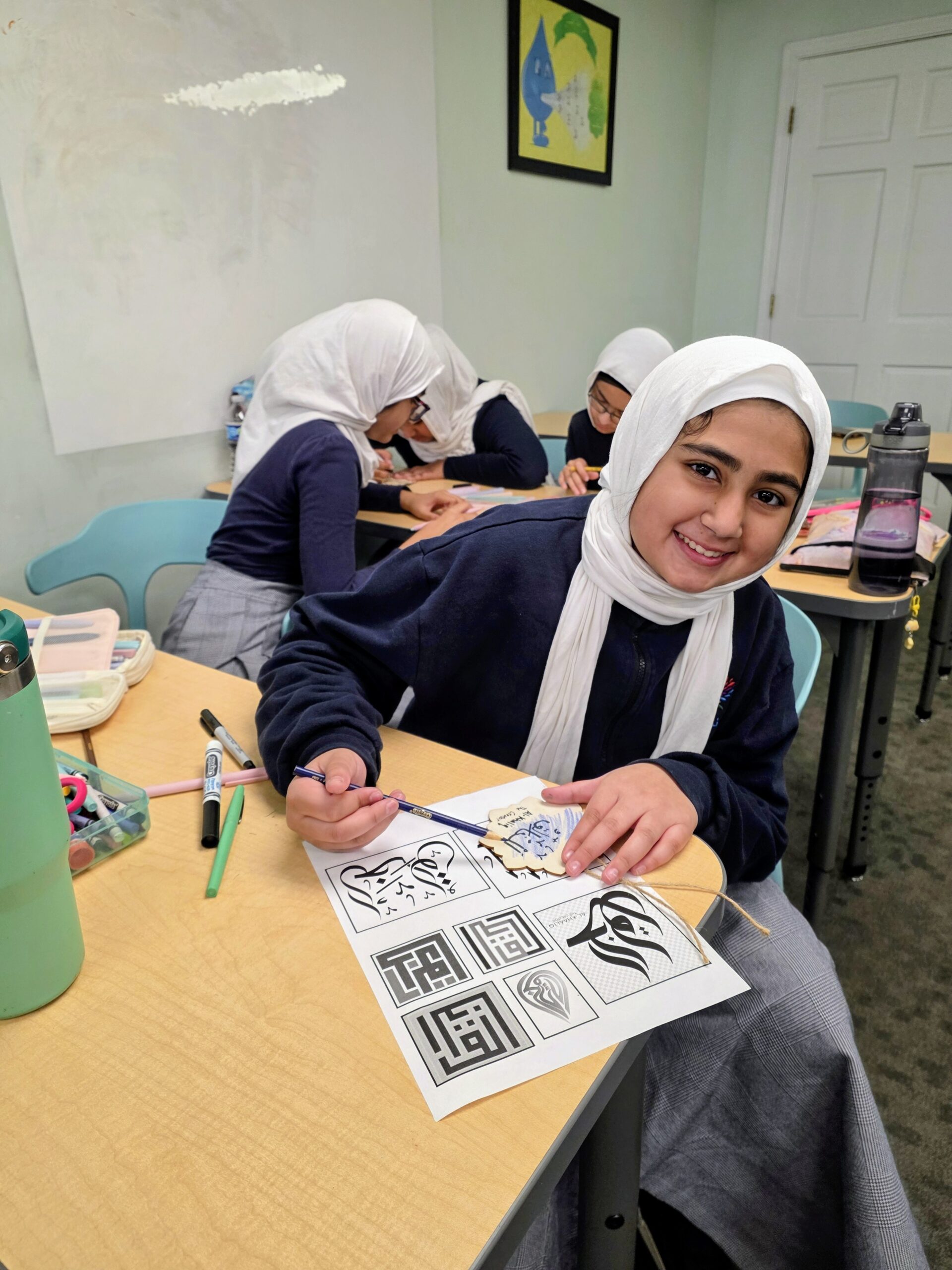
Art nurtures creativity, observation, and self-expression while helping students develop foundational artistic skills and techniques. Through drawing, painting, sculpture, mixed media, and design projects, students explore elements of art such as color, texture, shape, line, and form. Rooted in an Islamic worldview, the art program encourages students to recognize and appreciate the beauty, balance, and creativity found in Allah’s creation. Students learn to observe the world with wonder and gratitude, using art as a means of reflection and expression. They also explore the rich legacy of Islamic art and design, studying its history, patterns, calligraphy, geometry, and cultural contributions. Through these experiences, students develop artistic confidence, creative thinking, and a deeper appreciation for beauty as a sign of Allah’s greatness and wisdom.